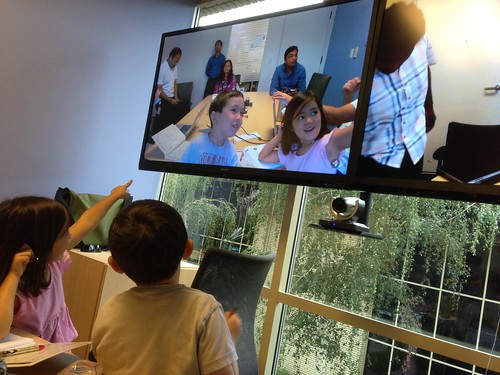
“Today’s children are ‘growing up digital,’” (Metiri Group, 2003, p.6), and educators right along side them. The rate at which access to technology is growing is unprecedented, as stated by the Metiri Group (2003) which has the potential to alter the way we teach and what we teach. Educators are facing a challenge of knowing what tools are available and how they may apply them to curricular learning activities. Student engagement, civic responsibility, and technology's impact on global issues unfolds an amazing opportunity to incorporate unique experiences that technology may provide. Connecting citizens across the globe on issues that affect us all is a powerful learning source. One that has revolutionized classrooms in the speed and distance which children can connect to others. The collaborative and participatory nature of technology allows us to be able to ask questions, develop solutions and achieve common goals that weren't possible before.

Yet, the tool isn't what makes the lesson meaningful or engaging. Technology is the vehicle that allows us the opportunity to learn, connect and collaborate and calls for a “...transformation of schools and classrooms into places of effective teaching and deep learning,” (Dunleavy & Milton, 2010, p.6). The pedagogy and purpose for learning, along with excitement and authenticity are what make the learning engaging. “Effective technology integration for pedagogy around specific subject matter requires developing sensitivity to the dynamic, transactional relationship between these components of knowledge situated in unique contexts,” (Koehler, 2006). Establishing the learning goal and method of delivery, along with rich opportunities for global connections are key to enhancing civic responsibility in students and increasing positive participation.

Lindsay,
ReplyDeleteYou did a wonderful job within your post summarizing the use of technology when you said ‘Technology is the vehicle that allows us the opportunity to learn, connect and collaborate.’ This ‘vehicle’ can be used to support student learning and student engagement. Dunleavy and Milton (2010) state “Engagement in learning--intellectual engagement--develops when students encounter work that is relevant, interesting, and connects with their aspirations and interests; when the work they do is authentic, challenging, deeply conceptual, highly social, and collaborative…" (p. 8). When students use the tools available to them to actively participate through connecting, collaborating, creating, and sharing in meaningful, authentic work within a global or civic context, student engagement, and ultimately, student learning is amplified.
So much teacher professional development that I have experienced surrounding the use of technology has been focused on the tool itself which has been very ineffective in terms of application to the classroom. Would placing a stronger emphasis on student engagement for teacher professional development lead to more meaningful questions about appropriate uses of technology?
As always, I enjoyed reading your post which clearly encapsulated many key elements of learning over the past few weeks.
Reference
Dunleavy, J. & Milton, P. (2010). Student Engagement for Effective Teaching and Deep Learning. Canadian Education Association, 48(5), 4-8. Retrieved from: http://www.cea-ace.ca/education- canada/article/student-engagement- effective-teaching-and-deep-learning
Hi Lindsay,
DeleteThanks for sharing your thoughts. I definitely agree with the Koehler, (2006) quote you chose regarding effective technology integration and pedagogy. We are fortunate enough to be teaching in an era where access to technology and devices has become increasingly easier. Throughout this course I have discussed my own schools journey to 21st century education and I am proud of our accomplishments to this point. We have dedicated significant resources to this initiative and now have the devices in place and the basic knowledge needed to use these devices in our regular teaching practices.
Yet as you in your post technology is simply a tool and improvements in engagement and student achievement will not occur if we do not change pedagogy. Our school is now focused on taking that next big step. We need to focus on pedagogy and professional development that will reform our teaching styles. It would be a shame to use the same old teaching strategies with all the new opportunities to engage and improve student achievement.
Thanks again Lindsay.
I’ve appreciated reading your post throughout the course and thank you for the dualogue.
References:
Koehler, M. (2006). TPACK.ORG. Tpack.org. Retrieved 7 April 2015, from http://www.tpack.org/
Metiri Group (2003). enGauge 21st Century Skills: Literacy in the Digital Age. 1-88
Excellent food for thought about how technology can and does encourage global minded citizenship. I agree with what the Metiri Group (2003) about the transformative capabilities of digital technologies in our schools. My class has connected with classrooms in the U.S. and in Singapore this year, providing a collaborative learning experience that would not have been possible before modern technology. Yet like you mention, the tool isn’t what makes the lesson meaningful and engaging. It is how we choose to use that technology and the questions we pose that elevate the lesson to a deep learning experience.
ReplyDeleteI have found that professional development experiences focused on particular programs and technology tools and how to use them, rather than focusing on their pedagogical place in the classroom. I would much prefer being given time to explore the tool and how it functions and spending the majority of PD time looking at why this tool is a valuable addition to my class, and what we want students to be achieve through its use.
References:
Metiri Group (2003). enGauge 21st Century Skills: Literacy in the Digital Age. 1-88